Casino Game Development: Full Cycle Guide for 2025
The global online gambling market is projected to exceed $100 billion by 2026, and casino game development sits at the heart of this explosive growth. This guide breaks down the technical, regulatory, and commercial aspects of building successful iGaming products. From RNG certification to RTP balancing, we cover what it takes to launch a competitive casino title.
Table of Contents
- Market Overview & Core Types of Casino Games
- Technology Stack for Casino Software Development
- RNG, RTP, and Mathematical Modeling
- Licensing and Certification Requirements
- Monetization Strategies and Retention Mechanics
- Cost Estimation and Development Timeline
- FAQ
Market Overview & Core Types of Casino Games
Understanding the product landscape is critical before writing a single line of code. Casino games generally fall into three major categories:
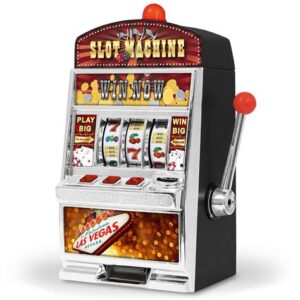
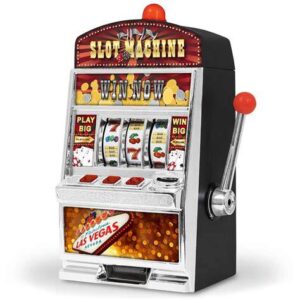
- Slot Machines: The most popular segment (over 70% of casino revenue). They require complex algorithms for paylines, multipliers, and bonus rounds.
- Table Games: Digital versions of Blackjack, Roulette, Poker, and Baccarat. These demand real-time interactivity and multiplayer support.
- Live Dealer Games: Hybrid solutions with video streaming, requiring advanced low-latency infrastructure and professional studios.
Each category has distinct technical challenges. For instance, live dealer games need WebRTC or Low-Latency HLS streaming, while slots rely heavily on mathematical probability distribution.
Technology Stack for Casino Software Development
Choosing the right technology stack determines your game’s performance, scalability, and user experience. Modern development teams typically combine:
| Component | Recommended Technologies | Purpose |
|---|---|---|
| Game Engine | Unity, Unreal Engine, Cocos2d | Rendering, physics, cross-platform build |
| Backend | Node.js, Go, Java (Spring) | Server logic, integration with payment gateways |
| Frontend (Web) | HTML5, React.js, WebGL | Browser-based gameplay without plugins |
| Database | PostgreSQL, MongoDB, Redis | User data, transactional history, caching |
| Streaming (Live) | WebRTC, FFmpeg, HLS | Real-time video for dealer games |
Key architectural principle: The client must never trust the server. All game logic that affects outcomes must execute server-side to prevent cheating and ensure fair-play certification.
RNG, RTP, and Mathematical Modeling
The mathematical model is the backbone of any casino game. Two critical metrics define your game’s profitability and legality:
- RNG (Random Number Generator): Usually implemented using Mersenne Twister or AES-based PRNGs. The system must pass statistical tests like NIST SP 800-22.
- RTP (Return to Player): The theoretical percentage of total bets returned to players over millions of spins. Average RTP in 2025 ranges between 94% and 96.5%.
- Hit Frequency: The probability of any winning event (typically 20-30% for slots).
…