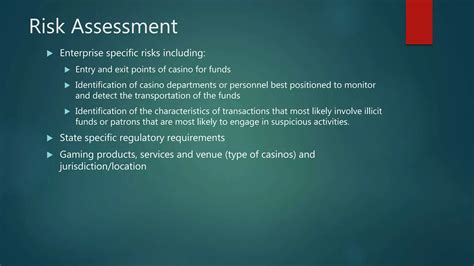
Casino Risk Assessment: A Comprehensive Expert Guide for Operators and Players
The dynamic world of online gambling offers immense opportunities, but it is inextricably linked to a complex web of financial, regulatory, and operational hazards. Without a systematic casino risk assessment, even the most promising gaming platforms can face catastrophic losses, legal penalties, and reputational damage. This guide provides a deep-dive framework to identify, evaluate, and mitigate the critical threats that define the iGaming ecosystem. By implementing robust strategies, stakeholders can transform uncertainty into a controlled, strategic advantage.
In This Guide
- The Core Pillars of Casino Risk
- Identifying Financial and Security Vulnerabilities
- The Role of Regulatory Compliance in Risk Mitigation
- Strategic Methods for Measuring Risk Exposure
- Actionable Framework for Risk Control
- Frequently Asked Questions (FAQ)
The Core Pillars of Casino Risk
A mature risk assessment strategy is not a single action but a continuous cycle of evaluation. It is essential to break down the core categories that directly impact a casino’s survival.
| Risk Category | Description | Potential Impact |
|---|---|---|
| Operational | Flaws in daily processes, system downtime, or human error. | Loss of revenue, poor customer experience. |
| Financial | Credit risks, cash flow volatility, and unexpected payout spikes. | Liquidity crises, insolvency. |
| Compliance | Violation of licensing laws (KYC, AML) and data protection rules. | Fines, license revocation, legal action. |
| Strategic | Poor market positioning or ineffective management decisions. | Loss of market share to competitors. |
Identifying Financial and Security Vulnerabilities
The first step in any casino risk assessment involves a deep dive into asset protection. The primary threats include:
- Fraud and Money Laundering: Casinos are inherently vulnerable to identity theft and the integration of dirty money. This requires KYC (Know Your Customer) protocols and transaction monitoring.
- Cybersecurity Threats: Distributed Denial-of-Service (DDoS) attacks and ransomware are common. A data breach can expose sensitive user data, severely denting trust.
- Game Integrity Issues: RNG (Random Number Generator) failures or collusion between players can compromise game fairness. This requires third-party audits and advanced AI-driven behavioral analytics to detect anomalies.
- Credit Risk: The use of credit cards and digital tokens exposes the casino to chargeback fraud. Implementing strict payment filters and velocity checks is the primary defense.
The Role of Regulatory Compliance in Risk Mitigation
An effective risk management framework is impossible without a strict adherence to legal standards. Since jurisdictions vary (e.g., Malta, the UK, or New Jersey), the approach must be geo-specific.
A non-negotiable checklist for compliance includes:
- AML/CFT Policies: Automating Know Your Transaction (KYT) tools to flag suspicious patterns.
…