Casino Roulette Bias: How to Detect and Exploit Wheel Imperfections
Every roulette player dreams of finding an edge over the house. While most rely on luck, a select few understand that physical wheels are not perfect—they develop predictable patterns. This phenomenon, known as casino roulette bias, has been the holy grail of advantage players for decades. In this guide, you’ll learn how real-world imperfections occur, how to detect them safely, and whether exploiting bias is a viable long-term strategy.
Table of Contents
- The Physics Behind a Biased Roulette Wheel
- Why Physical Bias Still Exists in Modern Casinos
- Statistical Methods to Detect a Biased Wheel
- Practical Strategies for Exploiting Roulette Bias
- Legal and Ethical Considerations
- FAQ: Everything You Need to Know About Roulette Bias
- Final Verdict: Is Bias Hunting Still Worth It?
The Physics Behind a Biased Roulette Wheel
No manufactured object is flawless. A roulette wheel—with its rotating spindle, metal frets, and wooden pockets—degrades over time. Common causes of bias include:
- Worn pocket separators: Deeper or shallower pockets alter ball deflection.
- Slight spindle tilt: Even a 0.5° deviation can favor one side.
- Defective ball, wheel leveling, or debris: Foreign material under the wheel base creates uneven friction.
- Rebound patterns: A smooth or rough fret surface can cause the ball to bounce systematically.
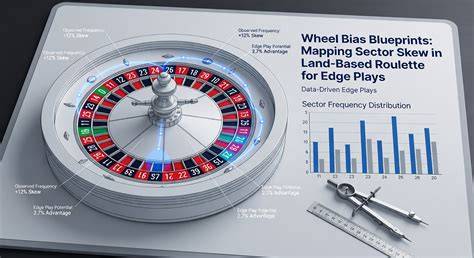
The effect is subtle: a biased wheel might yield a 1–2% probability shift, not a 50/50 outcome. But over thousands of spins, that edge converts into significant profit.
Why Physical Bias Still Exists in Modern Casinos
Las Vegas and European casinos use high-precision wheels manufactured by TCS John Huxley or Cammegh. These are extremely accurate, but they still age under the strain of 24/7 play. Casinos routinely rotate tables and replace wheels, but smaller venues or riverboat casinos may skip maintenance to cut costs. The best targets are older wheels, wooden-fret models, and venues without strict quality control. Digital RNG tables do not exhibit physical bias—they rely on algorithms, so bias hunting is only possible on mechanical wheels.
Statistical Methods to Detect a Biased Wheel
You cannot rely on intuition; you need data. A serious bias hunter uses a structured approach:
| Step | Action | Sample Size |
|---|---|---|
| 1 | Record every spin (use a mobile app or manual log). | 1,000+ spins |
| 2 | Calculate the frequency of each number (36 numbers + 0/00). | 2,000 spins |
| 3 | Apply chi-square test to compare observed vs expected distribution. | 3,000+ spins |
| 4 | Identify outliers—numbers appearing 3+ standard deviations above mean. | Final confirm |
—
- Chi-square test is your best friend. A p-value below 0.01 suggests a real pattern.
- Track the ball’s rotor speed: If the same sector wins repeatedly, you may have a rotor-ratio exploit.
Practical Strategies for Exploiting Roulette Bias
Once you identify a biased number or sector, deploy a low-variance betting plan:
…